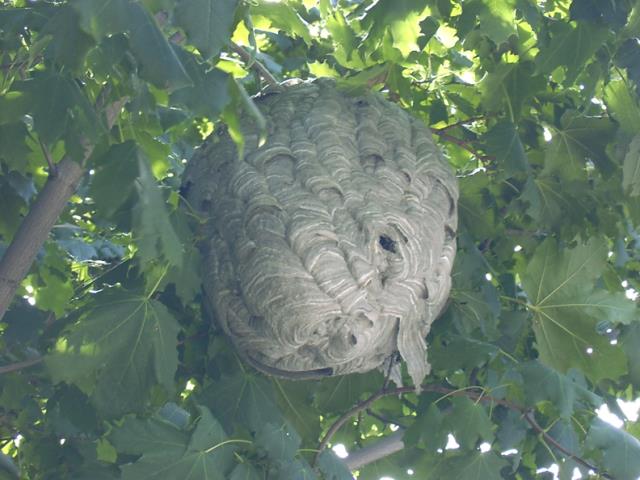
If this weather trend holds, Maheu&Maheu predicts an explosion in service requests as soon as the construction holiday ends.
While wasp colonies had a fairly standard start this spring, the intense and prolonged heatwave currently hitting Quebec is drastically changing the game.
The prolonged absence of rain combined with scorching temperatures on the eve of mid-summer provides an ideal environment for the development of vespids (wasps). Unlike last year, when an early spring accelerated the cycle ahead of schedule, current weather conditions are acting as the catalyst this year. Well-established queens are seeing their workers mobilize at a frantic pace, and nest sizes are growing visibly by the day.
As a reminder, while the beginning of summer can sometimes seem quiet, the industry's true peak season begins in mid-August—a period during which more than 60% of annual interventions are carried out, lasting until the first autumn frosts.
Nesting Habits by Species
Nesting behaviors vary greatly depending on the species:
- Aerial Paper Nests: Often highly visible under a cornice, a deck structure, or a tree branch.
- Ground or Landscaping Nests: Built in soil crevices or abandoned rodent burrows.
- Structural Nests (German Yellowjacket): This highly common species frequently infiltrates structural voids in buildings (such as soffits and vinyl siding).
Warning! If you notice continuous wasp traffic entering a hole in your siding or brickwork, never seal this opening . Blocking their exterior exit point will force them to find another way out, which almost invariably leads them to disperse inside the living spaces of the home.
Management and Prevention
Although wasps play a useful ecological role—notably as pollinators and predators of other insects—their proximity becomes problematic near living areas or in the presence of individuals with allergies.
- Decoy Nests: The field experience of our pest management technicians demonstrates that faux nests made of fabric or plastic do not provide the expected deterrent effect. Furthermore, it is not uncommon to find several active colonies of different species on the same property.
- Attractant Traps: To reduce pest pressure around your tables or patios, the use of traps equipped with a liquid bait is recommended. To maximize their effectiveness, install them along the perimeter, away from your gathering areas, in order to draw the wasps away before they invite themselves to your plates.
If the presence of a nest poses a risk to your health or safety, do not hesitate to contact our pest management experts to schedule a safe and long-lasting intervention.
go to top